


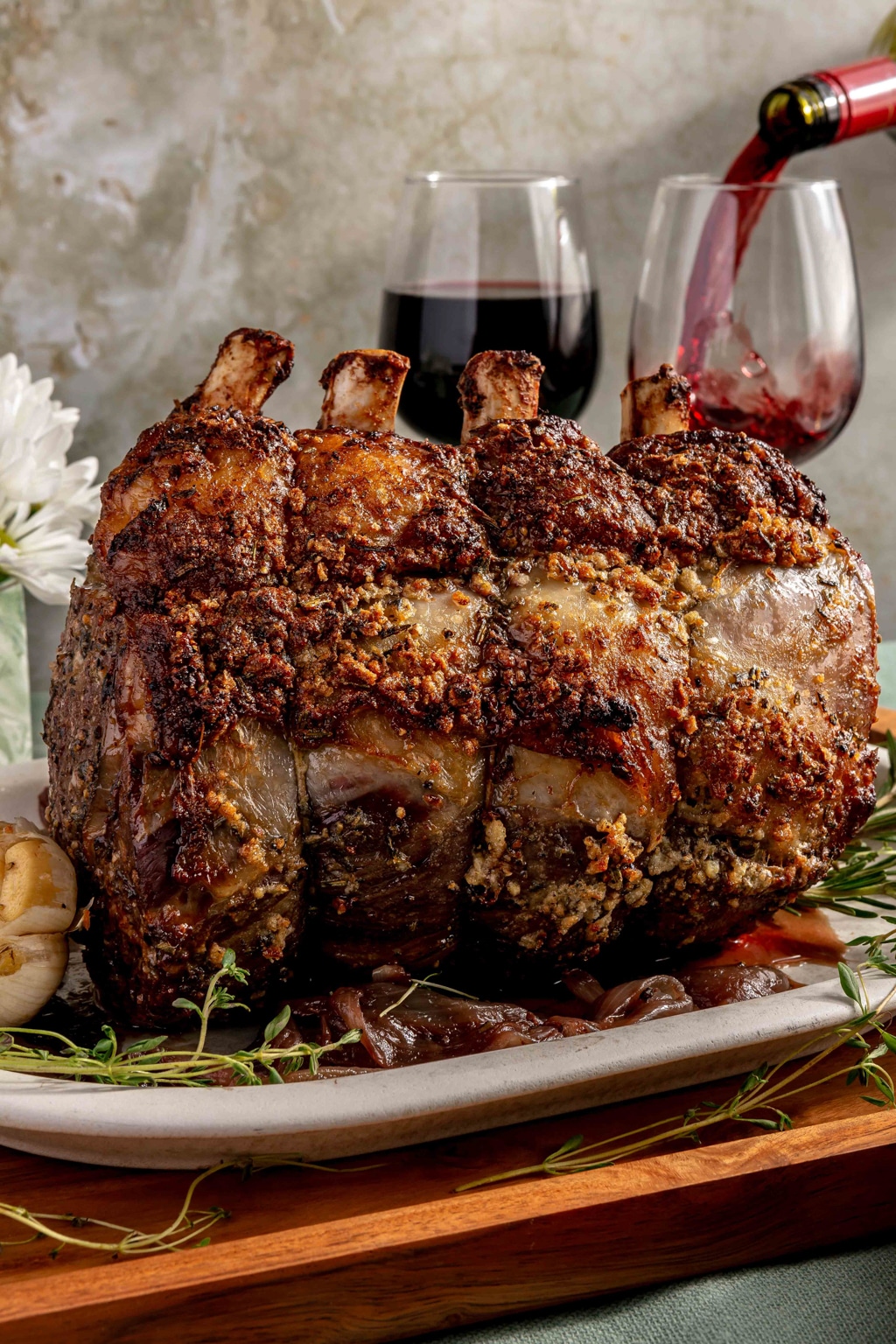
This never-fail Herb Crusted Prime Rib starts with a flavorful garlic-herb salt that we use to season a standing rib roast. It’s then roasted to medium-rare perfection and served with a delicious red wine au jus sauce. This easy-to-follow recipe uses the reverse sear method to achieve a perfectly rosy pink center every time. If you’re looking for a stunning main dish to serve at an upcoming holiday dinner, prime rib with au jus is always a winner!
Josh says: “We just made this and not only was it easy to do it tasted AMAZING. We’ve made prime rib for Christmas every year and this is the BEST one we’ve had. We will be using this recipe every year from now on. So good! So easy!”
Table of Contents
- This Is My Never-Fail Method for Roasting Prime Rib
- But First, You Need to Know How to Select the Right Prime Rib Roast!
- Ingredients for the Herb Crust and Au Jus
- Tools You’ll Need
- How to Cook a Prime Rib Roast (+ Lots of Tips!)
- How Long to Cook Prime Rib (+ Internal Temps to Know)
- What to Serve with Prime Rib
- More Holiday-Worthy Beef Dinner Recipes
This Is My Never-Fail Method for Roasting Prime Rib
Growing up, prime rib on Christmas Eve was the tradition I looked forward to all year long! My dad would let me help coat the prime rib in salt and cover it with the Dijon mustard. We’d eagerly anticipate dinner in the several hours it took to cook the prime rib. And when it was done? Perfection, every time.
We’d serve our succulent slices of prime rib with au jus, mashed potatoes and green bean casserole. It’s just the perfect dinner and it just feels special.
Now, as an adult, when we aren’t doing lasagna for Christmas Eve (another special meal!), we’re turning to the herb crusted prime rib of my childhood, especially if we’re entertaining. It’s such an iconic centerpiece that always elicits oohs and ahhs from our guests.
If prime rib is a dish that intimidates you, I’ve got all the best tips and tricks for turning out a perfect dinner every time. I’ve been perfecting this recipe for over a decade and now I get to share all that hard-won knowledge with you!

But First, You Need to Know How to Select the Right Prime Rib Roast!
First thing’s first: what exactly is prime rib? Also known as a standing rib roast, prime rib comes from the rib section of the cow, directly adjacent to the tenderloin. Are you a fan of ribeye steaks? Prime rib is just several ribeyes strung together, still on the bone.
Bone-in vs boneless. You can make this recipe using a boneless standing rib roast, but I prefer roasting bone-in prime rib for both presentation sake and also because the bones act a natural roasting rack for the meat. (If using boneless, note that the cook time will need to be decreased. This is why a probe thermometer is a must!)
What size to buy: I tend to opt for smaller prime rib roasts as I’m usually just feeding myself and my husband. A 4-5 lb bone-in prime rib roast (2-3 bones) comfortably feeds 4-6 people. If you are looking to feed more people, adjust the sizing accordingly. A 4-5 rib (7-8 lb) roast can feed anywhere from 8-12 people depending on the sides.
What to ask for: You can buy a prime rib or standing rib roast just about anywhere during the holidays, but these are the times I choose to patronize my local butcher shops. I ask my butcher to french the bones (i.e. remove any cartilage and excess fat between the bones), trim the fat cap if it’s really thick, and truss the roast between the bones for even cooking.


Ingredients for the Herb Crust and Au Jus
You can find the full list of ingredients, quantities & method in the recipe card at the end of the page.
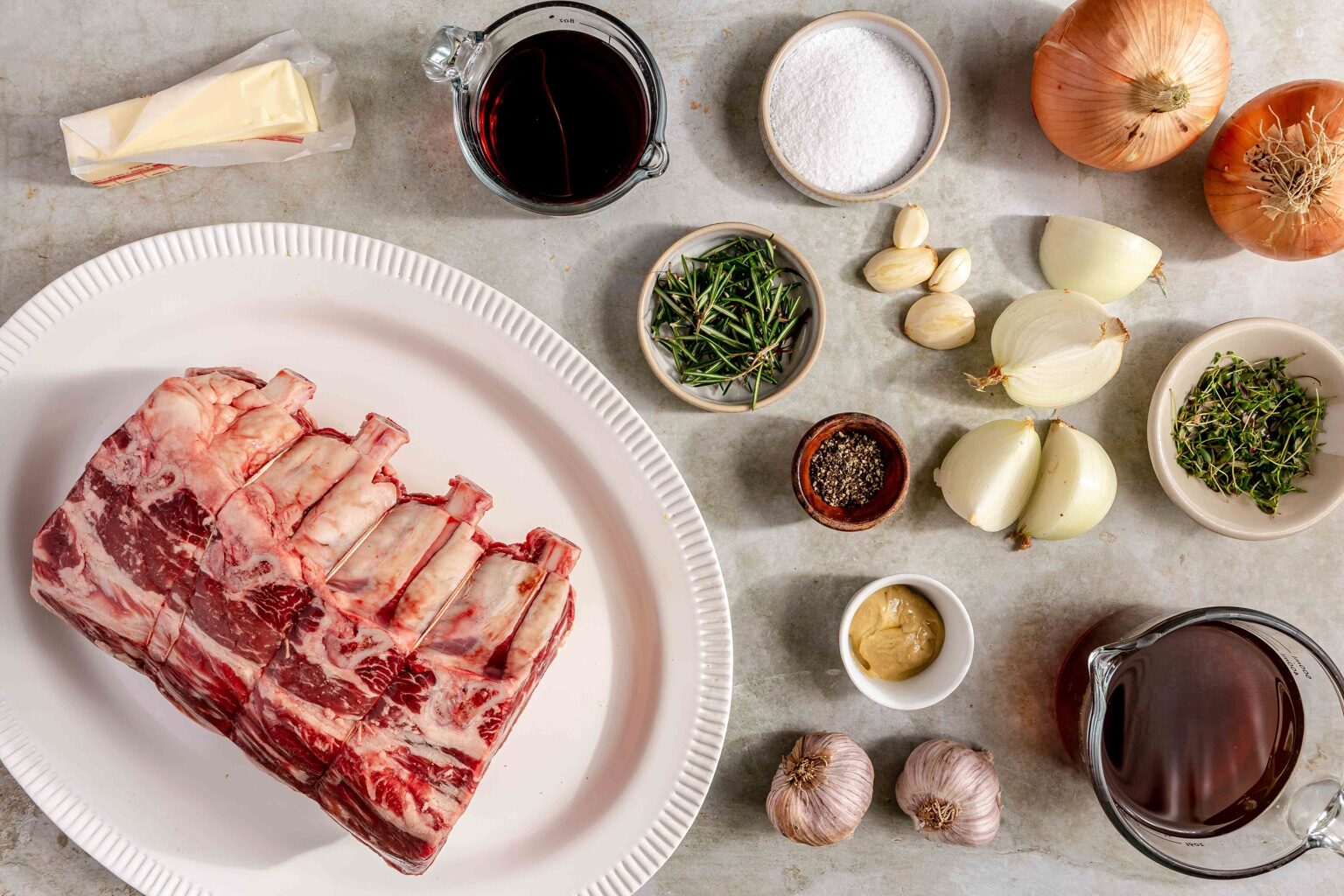
- Kosher salt. Do NOT sub in table salt, which has much finer grains than kosher salt and will make your prime rib taste super salty. I recommend the Diamond Crystal brand in particular.
- Fresh herbs. Since we’re working with such a pricey cut of beef, it’s fresh herbs all the way! I used fresh thyme and rosemary, but you can use other favorite herbs too.
- Garlic. The garlic gets roughly chopped and then turned into a paste using the flat side of your knife.
- Dijon mustard. Adds so much deep, savory flavor. This is what my dad always rubbed our holiday prime rib with, so I do too!
- Unsalted butter. Gets mixed with the Dijon to create a nice crust on the prime rib and lock in moisture. Use unsalted to prevent your prime rib from tasting too salty.
- Red wine. Use your favorite red wine. I typically use a Cabernet Sauvignon.
- Beef stock. Again, since prime rib costs a pretty penny I strongly suggest using the best quality beef stock that you can find. Read the ingredients label to make sure it’s a good brand!
Tools You’ll Need
- Oven Safe Braiser or Skillet
- Sharp Knife
- Cutting Board
- Probe Thermometer


How to Cook a Prime Rib Roast (+ Lots of Tips!)
Just a reminder: ‘Prime’ rib refers to the primal rib region where the meat comes from, not the grade of the beef. You’ll find a lot of prime rib is choice grade (and still great) because prime grade carries a much higher price tag on an already expensive cut of beef.
- First, prep the prime rib. I always ask my butcher to french the bones, which just means removing any excess fat and cartilage between the bones. It’s technically an optional step, but it makes for the most stunning table side presentation! I also recommend asking your butcher to truss the bones, which help cook the meat more evenly.
- Rub the prime rib with garlic herb salt. Really work the seasoned salt into every nook and cranny of the meat. To create a nice crust, it then gets placed into the fridge (uncovered) for 12 hours.


- Bring to room temp before roasting. This step is essential! Take the seasoned prime rib out of the fridge a full hour before roasting it so it cooks evenly in the oven.
- Slather with butter and Dijon, then roast. I’ve listed the exact cook times below, but the key thing to remember is to roast your prime rib with the bones down to encourage air flow and even cooking.


A note on the oven temperature: This recipe uses what’s known as the “reverse sear method.” The prime rib starts in a 500ºF oven, then as soon as you close the door you need to reduce the temperature to 225ºF (yes, 225ºF — it’s not a typo!). Starting the prime rib in a really hot oven gives it a deeply golden crust, but by finishing it low and slow we can preserve its rosy pink center.
- Rest for 30 minutes before slicing. This gives the juices time to redistribute and the meat time to gently finish coming up to the target internal temperature of 120ºF.
- Meanwhile, make the au jus and then serve. Au Jus is French for ‘with juice’ which is just a fancy way of jazzing up pan drippings to make a thin sauce, usually served with meat. In this instance, we’re using the drippings from the prime rib roasting over sweet onions and enhancing it with a bit of red wine and beef stock. Reducing it down concentrates the flavor and makes the most delicious au jus for serving with this herb crusted prime rib.


How Long to Cook Prime Rib (+ Internal Temps to Know)
Prime rib is best served medium-rare or medium. If you do not like medium-cooked beef, please don’t make this recipe! I cannot in good conscience let you spend upwards of $100 to overcook it.
Rather than giving you cooking times, the best way to cook prime rib is to cook by temperature. I recommend getting an inexpensive probe thermometer or investing in a Meater wireless thermometer for the most accurate results.
Each cut of meat is different and everyone’s ovens are different, so to minimize variables I always recommend following temperature cooking guides for beef.
- Medium-rare: Plan to pull the prime rib when it reaches 120ºF
- Medium: Plan to pull the prime rib when it reaches 130°F
REMEMBER: As the prime rib rests, the temperature will continue to rise anywhere from 5-10ºF. Always make sure the thermometer is inserted into the middle of the roast at the thickest part.


What to Serve with Prime Rib
While the tender prime rib is the star of the show, it’s just begging to be served with your favorite sides! For me, a potato side dish is a must, plus a salad of some kind.
- Salad. Start dinner with a classic Wedge Salad or Little Gem Caesar Salad.
- Potatoes. Something like these Horseradish Mashed Potatoes or even these fancy Twice Baked Potatoes is perfect!
- Veggies. Don’t forget a veggie side like Creamed Spinach, Sautéed Green Beans, or Sweet and Savory Roasted Brussels Sprouts.
And in addition to the red wine au jus, I highly recommend serving your herb roasted prime rib with creamy horseradish sauce!

If you do give this recipe a try, be sure to let me know! Leave a comment with a star rating below. Be sure to subscribe to my weekly newsletter and never miss a new recipe! You can also snap a photo & tag @JENNYGOYCOCHEA on Instagram. I LOVE hearing about & seeing your SMF creations!
More Holiday-Worthy Beef Dinner Recipes
- Red Wine Braised Short Ribs
- Herb Roasted Beef Tenderloin
- Cranberry Braised Short Ribs
- Reverse-Sear Prime Rib (for a smaller crowd!)
- French Onion Braised Beef
- Beef Wellington for Two
This post contains affiliate links from which I receive a small commission at no additional cost to you. As an Amazon Associate, I earn from qualifying purchases. Affiliate links allow me to keep providing great recipes for free and I never recommend products that I don’t love and personally own.

Herb Crusted Prime Rib Recipe (Standing Rib Roast)
Ingredients
- 7-8 lb bone-in prime rib or standing rib roast* (3-4 bones)
- 3 tablespoons kosher salt, diamond crystal is best
- 2 teaspoons freshly ground black pepper
- 4 garlic cloves, peeled
- 4 sprigs rosemary, stripped of leaves
- 2 tablespoons fresh thyme leaves
- 1 stick unsalted butter, softened (4oz)
- 1 tablespoon dijon mustard
- 2 yellow onions, peeled and quartered
- 2 heads garlic, tops cut off to expose the cloves
- 1 cup red wine
- 2 cups beef stock or broth
Instructions
- Prep the prime rib. For presentation purposes, ask your butcher to french the bones (remove any meat and excess fat). This is purely optional, but really makes a stunning presentation. Truss the roast by tying kitchen twine around the roast between each bone. This keeps the meat tightly compressed and helps it cook more evenly. You can also ask your butcher to do this!
- Make the garlic-herb salt. Using a sharp knife, finely mince the rosemary and thyme. Mix the herbs with the kosher salt and pepper. Very finely mince the garlic, then sprinkle the garlic with a little salt and use the flat side of the knife to create a paste. Use your fingers to really mix the garlic into the herb salt.
- Season the prime rib. Lay the prepared rib roast on a wire rack set over a rimmed baking sheet. Sprinkle the garlic herb salt all over the outside of the roast and try to rub the salt into the surface of the meat. Transfer to the fridge for 12-24 hours uncovered.
- Bring the roast to room temperature. Remove the roast from the fridge 1 hour before cooking to take the chill off. Mix the softened butter with the dijon mustard and spread it in an even layer all over the roast.
- Preheat an oven to 500ºF.
- Roast the prime rib. Position your oven racks so that the prime rib sits in the center of the oven. Arrange the onion and garlic bulbs in the bottom of a large, oven-safe cast iron skillet (12-13") or braiser. Lay the beef, fat cap side up/bones down, on the bed of onions and transfer to the oven for 20 minutes. Lower the heat to 225ºF and continue to cook until the internal temperature registers at 115ºF-120ºF, for medium rare, basting the roast with pan juices every 30 minutes or so. The cook time is dependent on the shape of the roast, pan size, etc. so I recommend using a probe thermometer to track the temperature vs relying on a specific time.
- Rest the beef. Remove the roast from the oven and transfer to a cutting board. Loosely tent with foil and let the roast rest for 30 minutes.
- Make the au jus. While the roast rests, remove the garlic bulbs from the skillet and set aside. Pour the wine and beef broth into the skillet used to roast the beef. Bring to a simmer and reduce by 1/2, until the sauce is thick enough to coat the back of a spoon. Season to taste (if needed).
- Serve. Remove the bones from the prime rib (save for making beef stock!). Slice the roast and arrange the beef on a serving platter with the onions and garlic bulbs. Serve with the red wine jus on the side.


Rate & Review This Recipe
If I am making this as a boneless prime rib roast (as that is what my local store generally sells), do I follow the recipe the same way and adjust cooking times as per thermometer? I am assuming the boneless roast will cook faster than bone-in.
Yes! i still recommend trussing the roast to help with even cooking. Definitely use a thermometer as the boneless roast will cook faster.
Hi! I just want to be sure – do we cook at 225 or 325? I have looked up several recipes and many of them say 325 so I’m just double checking! 🙂 love your dry rub / marinade so will plan on using that for my holiday prime rib recipe!
225–this is a method known as the reverse sear. You cook the prime rib low and slow until it reaches the preferred internal temperature and you get a perfect pink center all the way to the edges. It will take longer to cook than recipes that cook at 325, but this is my preferred method for perfect prime rib every time. Hope that helps!
We just made this and not only was it easy to do it tasted AMAZING. We’ve made prime rib for Christmas every year and this is the BEST one we’ve had. We will be using this recipe every year from now on. So good! So easy!